




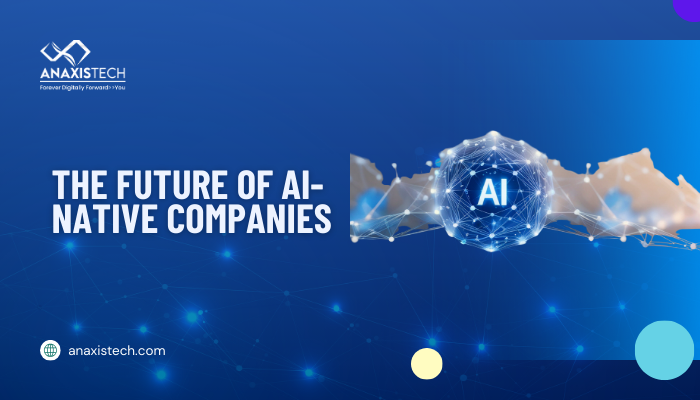
A new kind of organization is emerging—AI-native companies. Unlike traditional businesses that adopt AI as an add-on, AI-native companies are built with artificial intelligence at their core. From decision-making and operations to product design and customer engagement, AI is embedded into every layer of the organization.
As we move deeper into the AI-driven economy, AI-native companies are setting new standards for speed, scalability, and innovation. This shift is redefining how businesses are created, scaled, and sustained.
What Makes a Company AI-Native?
An AI-native company does not simply use AI tools—it operates through them. AI becomes the primary engine for execution, learning, and optimization.
Key Characteristics of AI-Native Companies
- AI is integrated into core workflows, not isolated use cases
- Data is treated as a strategic asset
- Automation and intelligence drive daily decisions
- Systems continuously learn and improve
- Human teams collaborate with AI systems as partners
Why AI-Native Companies Are the Future
1. Built for Speed and Scale
AI-native companies can launch products, analyze markets, and adapt strategies faster than traditional organizations. Automation removes operational bottlenecks, allowing rapid experimentation and iteration.
2. Continuous Intelligence
Unlike static systems, AI-native models learn continuously from new data. This enables real-time optimization across marketing, pricing, supply chains, and customer experience.
3. Lean, High-Impact Teams
AI-native organizations rely on smaller teams augmented by AI. Productivity is amplified without proportional increases in headcount.
4. Data-Driven by Default
Every decision—from product features to hiring—is backed by data and AI insights, reducing human bias and guesswork.
How AI-Native Companies Operate Differently
AI-First Product Development
Products are designed to learn from users, improve themselves, and deliver personalized experiences without constant manual updates.
Autonomous Operations
AI handles scheduling, forecasting, optimization, quality control, and exception management with minimal human intervention.
Intelligent Customer Engagement
Customer interactions are personalized at scale using AI-driven insights, predictive responses, and adaptive support systems.
Decision Intelligence
Executives rely on AI-generated forecasts, scenario simulations, and real-time dashboards to guide strategic choices.
Industries Being Transformed by AI-Native Models
- Software and SaaS
- Fintech and digital banking
- Healthcare and biotech
- E-commerce and retail
- Logistics and supply chain
- Media and content creation
AI-native competitors in these sectors are already outperforming traditional players in innovation and efficiency.
Challenges AI-Native Companies Must Address
Ethical and Responsible AI
Transparency, fairness, and explainability are critical to maintaining trust in AI-driven decisions.
Data Security and Privacy
AI-native companies must implement strong governance and compliance frameworks to protect sensitive data.
Talent Evolution
Employees must learn to collaborate effectively with AI systems rather than compete with them.
How Traditional Companies Can Transition Toward AI-Native
- Shift from automation projects to AI-driven strategy
- Invest in unified data infrastructure
- Embed AI into core business processes
- Encourage cross-functional AI collaboration
- Build human-in-the-loop systems for oversight
Becoming AI-native is a journey, not an overnight transformation.
The Road Ahead
The future will favor companies that treat AI as a fundamental operating system—not a tool. AI-native companies will innovate faster, operate smarter, and adapt continuously to change.
As competition intensifies, the advantage will go to organizations that are designed to learn, think, and act at machine speed while preserving human creativity and judgment.


Leave a Reply