




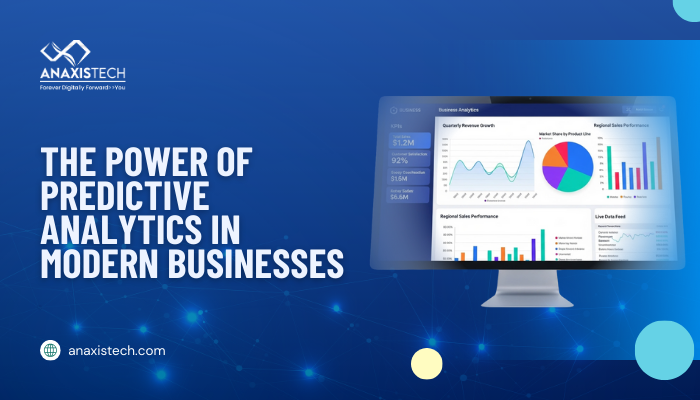
In today’s rapidly evolving digital landscape, data is more than an asset—it’s a competitive advantage. Predictive analytics, powered by machine learning and statistical modeling, enables businesses to anticipate future outcomes and make smarter, faster decisions. From improving customer retention to optimizing operations and forecasting demand, predictive analytics is transforming how modern organizations operate.
As businesses in 2026 increasingly shift toward data-driven strategies, predictive analytics is emerging as a central component of growth, innovation, and long-term planning.
What Is Predictive Analytics?
Predictive analytics involves using historical data, algorithms, and machine learning models to identify patterns and predict future trends. It moves decision-making from reactive to proactive by enabling organizations to forecast what is likely to happen based on behavior, trends, and performance indicators.
Predictive models rely on techniques such as classification, regression, clustering, and time series analysis. These insights help businesses plan more accurately, reduce risk, and respond to market shifts with confidence.
Why Predictive Analytics Matters for Modern Businesses
Predictive analytics is reshaping industries by driving operational efficiency and enhancing strategic decision-making. It empowers leaders with real-time foresight, enabling them to act before issues arise or opportunities are missed. Here are the main reasons it has become essential for modern organizations:
1. More Accurate Forecasting
Businesses need reliable predictions to stay competitive. Predictive analytics helps organizations forecast demand, sales cycles, staffing needs, and cash flow.
This leads to better planning, reduced wastage, and improved financial outcomes.
2. Improved Customer Experience
By analyzing customer behavior patterns, predictive analytics helps companies anticipate needs, personalize offerings, and deliver more relevant experiences.
Retailers, e-commerce platforms, and service-based businesses can tailor their strategies to increase satisfaction and loyalty.
3. Enhanced Risk Management
Predictive models help identify anomalies, fraud indicators, or operational risks before they escalate.
Banks, insurance firms, and fintech companies rely heavily on predictive analytics to detect irregularities, comply with regulations, and safeguard customer assets.
4. Operational Efficiency and Cost Reduction
Predictive insights allow businesses to optimize inventory, prevent equipment failures, and streamline logistics.
Manufacturing, supply chain, and energy sectors benefit significantly from predictive maintenance and process optimization.
5. Better Strategic Decision-Making
Leaders can make data-backed decisions with higher confidence. Predictive analytics turns raw data into actionable insights, enabling executives to allocate resources effectively and plan long-term growth strategies.
Use Cases of Predictive Analytics Across Industries
Predictive analytics is no longer limited to tech giants. Multiple industries now rely on it to stay ahead:
Retail
Forecasting sales, optimizing stock, and predicting customer churn.
Healthcare
Identifying patient risks, improving treatment plans, reducing hospital readmissions.
Finance
Fraud detection, credit scoring, investment forecasting.
Manufacturing
Predictive maintenance, demand planning, production optimization.
Marketing
Campaign performance forecasting, audience segmentation, lead scoring.
Logistics
Route optimization, shipment forecasting, fleet management.
How Machine Learning Powers Predictive Analytics
Machine learning algorithms continuously learn from data, improving the accuracy of predictions over time.
Common methods include:
- Regression models
- Neural networks
- Decision trees
- Time-series forecasting
- Clustering algorithms
ML-enabled predictive analytics allows businesses to analyze vast datasets in real time and uncover insights that manual analysis would miss.
Building a Predictive Analytics Strategy
To harness predictive analytics effectively, organizations should follow a structured approach:
- Define business objectives
- Identify the specific outcomes you want to predict or optimize.
- Collect high-quality data
- Clean, consistent datasets are critical for accurate predictions.
- Choose the right tools and platforms
- Cloud-based analytics platforms simplify model building and deployment.
- Build and train predictive models
- Use ML algorithms to analyze patterns and forecast outcomes.
- Integrate insights into decision-making
- Ensure stakeholders can easily access and act upon predictive insights.
- Continuously refine and monitor models
- Maintain accuracy by retraining and updating models with new data.
The Future of Predictive Analytics
As AI and machine learning advance, predictive analytics will become even more powerful and accessible.
In 2026 and beyond, we can expect:
- Real-time forecasting for all business functions
- More automated decision-making
- Deeper integration with IoT and edge computing
- Predictive insights embedded directly into enterprise tools
Businesses that adopt predictive analytics now will gain a significant competitive edge as data becomes the core driver of innovation.
Conclusion
Predictive analytics is transforming how businesses operate, plan, and grow. By leveraging machine learning and forecasting models, companies can make smarter decisions, streamline operations, and uncover new opportunities.
In an era where data drives every business move, predictive analytics is not just an advantage—it’s a necessity for staying ahead.



Leave a Reply