




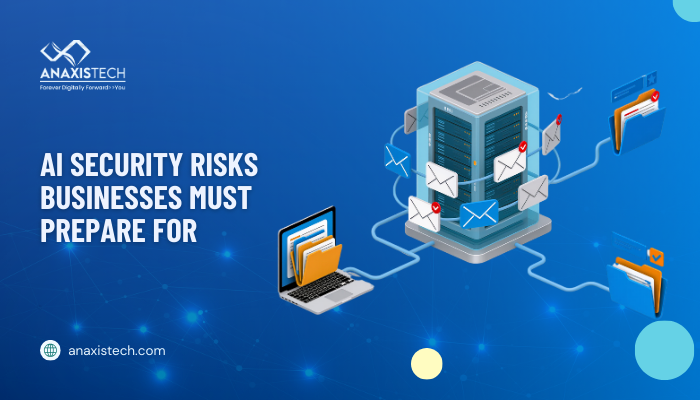
Artificial Intelligence is rapidly becoming a core part of modern business operations. From automation and analytics to customer experience and decision-making, AI delivers immense value. However, as adoption increases, so do the risks associated with security, data privacy, and misuse. Businesses that fail to address these challenges may face financial losses, reputational damage, and regulatory penalties.
Understanding AI Security risks is essential for organizations looking to adopt AI responsibly and sustainably.
Why AI Security Matters for Businesses
AI systems process massive volumes of sensitive data and often operate autonomously. This makes them attractive targets for cybercriminals and increases the potential impact of security breaches. Unlike traditional software, AI systems can also learn from compromised data, amplifying risks if not properly secured.
Strong AI Security practices help businesses protect data, ensure trust, and maintain compliance in an increasingly AI-driven environment.
Key AI Security Risks Businesses Must Prepare For
1. Data Privacy and Leakage
AI systems rely heavily on data, including customer, financial, and operational information. Poor data handling or unsecured models can expose sensitive data.
Risk Impact:
- Regulatory violations
- Loss of customer trust
- Legal and financial penalties
2. Model Manipulation and Poisoning
Attackers can intentionally feed corrupted or biased data into AI models, causing incorrect predictions or harmful outcomes.
Risk Impact:
- Faulty business decisions
- Increased operational risk
- Loss of system reliability
This makes AI Security controls critical during data collection and model training.
3. Unauthorized Access to AI Systems
Weak authentication or access controls can allow attackers to manipulate AI tools, steal insights, or misuse automation capabilities.
Risk Impact:
- Data breaches
- System abuse
- Operational disruption
4. Lack of Explainability and Transparency
Black-box AI models make it difficult to understand how decisions are made. This can be problematic in regulated industries.
Risk Impact:
- Compliance challenges
- Difficulty auditing decisions
- Reduced accountability
5. AI-Powered Cyberattacks
Cybercriminals now use AI to launch more sophisticated phishing, malware, and social engineering attacks.
Risk Impact:
- Increased attack success rates
- Harder-to-detect threats
- Faster attack execution
Organizations must strengthen AI Security defenses to counter AI-driven threats.
6. Over-Reliance on Automation
Excessive dependence on AI without human oversight can lead to unchecked errors or malicious outcomes.
Risk Impact:
- Critical failures
- Poor risk management
- Reduced human control
Business Consequences of Poor AI Security
- Financial losses and operational downtime
- Regulatory fines and legal action
- Brand and reputation damage
- Loss of customer and partner trust
Ignoring AI Security can turn innovation into a liability.
Best Practices to Strengthen AI Security
Implement Strong Data Governance
Ensure data is clean, secure, and compliant with privacy regulations.
Secure AI Models and APIs
Use encryption, access controls, and regular audits to protect AI systems.
Adopt Human-in-the-Loop Controls
Maintain human oversight for high-impact decisions and sensitive processes.
Monitor and Test AI Systems Continuously
Detect anomalies, bias, and performance issues early.
Ensure Regulatory and Ethical Compliance
Align AI usage with legal, ethical, and industry standards.
Following these practices helps businesses build robust AI Security frameworks.
Preparing for the Future of AI Security
As AI systems become more autonomous and integrated into critical operations, security challenges will grow in complexity. Future-ready organizations will treat AI security as a core component of enterprise risk management—not an afterthought.
Investing early in AI Security enables businesses to innovate confidently while protecting their data, customers, and reputation.
Conclusion
AI offers transformative potential, but it also introduces new security risks that businesses must address proactively. By understanding vulnerabilities, implementing strong governance, and maintaining human oversight, organizations can mitigate threats effectively. Prioritizing AI Security is essential for building trust, ensuring compliance, and sustaining long-term success in an AI-driven world.



Leave a Reply