




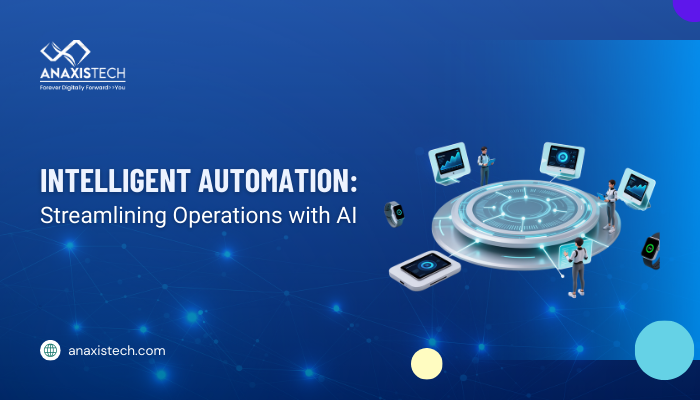
In an era where speed, accuracy, and innovation define business success, organizations are turning to AI-powered automation to remain competitive. Intelligent automation is more than just task automation — it is the fusion of Artificial Intelligence (AI), Machine Learning (ML), and workflow optimization technologies to transform how businesses operate.
As industries evolve, companies that embrace AI automation gain measurable improvements in efficiency, decision-making, and operational agility. From reducing manual workloads to enhancing customer experiences, the impact of intelligent automation is reshaping modern enterprises.
At AnaxisTech, we help organizations leverage intelligent automation to unlock new performance levels, reduce operational bottlenecks, and accelerate business efficiency.
What Is Intelligent Automation?
Intelligent automation combines AI, rule-based systems, and data-driven decision-making to automate not just repetitive tasks but entire workflows.
While traditional automation focuses on predefined rules, intelligent automation brings flexibility and adaptability.
It includes:
- AI algorithms for smart decision-making
- Machine Learning models for pattern recognition
- Robotic Process Automation (RPA) for task execution
- Process mining for workflow optimization
- Natural Language Processing (NLP) for language-based interactions
This blend enables businesses to automate complex processes and continuously optimize operations for long-term efficiency.
Why Intelligent Automation Matters in 2026 and Beyond
Businesses face rising expectations from customers, increasing operational costs, and the need for rapid digital transformation. AI automation meets all three challenges.
Here’s why intelligent automation is becoming a priority:
1. Enhanced Operational Efficiency
AI automation reduces manual work, speeds up workflows, and eliminates bottlenecks.
Tasks that once took hours — such as data entry, approvals, or reporting — now happen in seconds.
2. Improved Accuracy & Reduced Errors
Automation removes human error from repetitive tasks. AI-driven validation ensures better data accuracy and consistent outcomes.
3. Real-Time Decision-Making
AI analyzes vast datasets instantly, enabling businesses to make data-driven decisions faster than ever.
4. Scalability Without Additional Costs
Instead of hiring large teams, businesses can scale through digital workers and automated workflows — optimizing resources and maximizing profitability.
5. Customer Experience Enhancement
Intelligent automation improves experience through faster responses, personalized interactions, and proactive support.
By integrating AI into core operations, businesses unlock new opportunities for growth and innovation.
Key Use Cases of AI Automation in Modern Businesses
AI automation applies across industries and departments, making it one of the most versatile transformation tools.
1. Workflow Optimization
AI analyzes existing processes, identifies inefficiencies, and automates repetitive tasks — improving workflow performance end to end.
2. Finance & Accounting Automation
- Invoice processing
- Fraud detection
- Cash-flow forecasting
- Expense reporting
Organizations reduce processing time and increase financial accuracy.
3. HR & Recruitment Automation
AI automates:
- Resume screening
- Interview scheduling
- Employee onboarding
- HR data management
This ensures faster hiring and improved employee experience.
4. Customer Support Automation
AI chatbots and virtual agents provide 24/7 support, reducing response times and increasing resolution rates.
5. Sales & Marketing Automation
AI helps:
- Qualify leads
- Personalize campaigns
- Predict conversions
- Automate follow-ups
Businesses increase sales productivity and customer engagement.
6. IT Operations & Monitoring
AI-powered systems detect issues before they occur, automate alerts, and ensure system stability.
From small tasks to large-scale automation, intelligent automation transforms the way teams work.
How Intelligent Automation Drives Business Efficiency
The core goal of intelligent automation is business efficiency — and it accomplishes this through several strategic advantages:
1. Faster Turnaround Time
AI-powered workflows operate around the clock, significantly reducing the time required to complete tasks.
2. Reduced Workforce Burden
Employees are freed from repetitive tasks, allowing them to focus on creativity, strategy, and customer engagement.
3. Optimized Resource Utilization
Automation ensures resources are used efficiently, reducing unnecessary workloads and improving operational performance.
4. Better Workflow Visibility
AI tools provide real-time tracking and analytics, helping managers identify delays and allocate resources effectively.
5. Cost Efficiency
With automated workflows, businesses reduce manual labor costs and minimize error-related expenses.
Intelligent automation becomes the foundation for long-term operational excellence.
The Role of AI in Workflow Optimization
AI brings intelligence to workflow automation by learning from data, predicting outcomes, and optimizing tasks dynamically.
Key AI Capabilities Include:
- Predictive analysis to anticipate delays or issues
- Pattern recognition to streamline repetitive processes
- Natural language understanding for human-like communication
- Self-learning algorithms that enhance workflows over time
This continuous improvement makes workflows smarter, faster, and more efficient.
Intelligent Automation Across Industries
Retail
AI automates inventory, order fulfillment, and customer interactions — enhancing the shopping experience.
Healthcare
Automation helps manage patient records, appointments, and diagnostic workflows.
Manufacturing
Predictive maintenance, quality inspection, and production planning are enhanced through AI automation.
Logistics
AI streamlines route planning, shipment tracking, and fleet management.
Banking & Finance
Fraud detection, credit scoring, and compliance workflows become faster and more accurate.
Every industry benefits from improved efficiency, reduced costs, and better decision-making.
The Future of Intelligent Automation
As AI evolves, intelligent automation will become even more powerful.
Future trends include:
- Hyperautomation — automating end-to-end operations using AI + RPA + ML
- Cognitive automation — systems that understand context and make independent decisions
- AI-driven workforce management — predicting workloads and optimizing staffing
- Generative AI workflows — creating documents, reports, and content automatically
- Autonomous business operations — minimal human intervention
By 2030, intelligent automation is expected to become a core component of every digitally mature enterprise.
How AnaxisTech Helps Businesses Embrace Intelligent Automation
At AnaxisTech, we design automation strategies that solve real business challenges and drive measurable outcomes.
Our expertise includes:
- AI automation strategy development
- Workflow optimization
- RPA implementation
- NLP & AI chatbot development
- Process mining & automation consulting
- Integration with CRM, ERP, and cloud platforms
We deliver scalable, intelligent automation solutions that enhance efficiency, streamline operations, and deliver long-term business value.
Conclusion
Intelligent automation is no longer optional — it is essential for businesses aiming to grow, innovate, and stay competitive.
By integrating AI automation, companies can transform workflows, reduce operational costs, and boost business efficiency.
At AnaxisTech, we empower organizations to unlock the full potential of AI-driven workflow optimization, ensuring they stay ahead in the rapidly evolving digital economy.



Leave a Reply